MAGHAKYAN BOTANIC
Maghakyan Botanic
Services
Healthy growth alone does not always create a well-balanced plant. Many indoor and outdoor plants benefit from professional shaping to maintain proportion, control size and remain visually integrated with the surrounding interior or landscape.
Our Plant Shaping service includes structural assessment, sanitary pruning, thinning, growth-direction correction, formative pruning and, where appropriate, rejuvenation. Every intervention is adapted to the plant species, growth habit and season.
The service is suitable for houseplants, office plants, ornamental shrubs, trees, hedges, evergreen plants and conifers.
Plant shaping is a controlled maintenance process that manages the structure and direction of plant growth. It may include selective branch removal, crown balancing, size control, thinning dense growth and removing damaged sections.
A properly shaped plant should still look natural. The goal is to enhance the plant's own character rather than impose an artificial appearance.
Dead, damaged, diseased or conflicting growth is removed to improve both plant health and appearance.
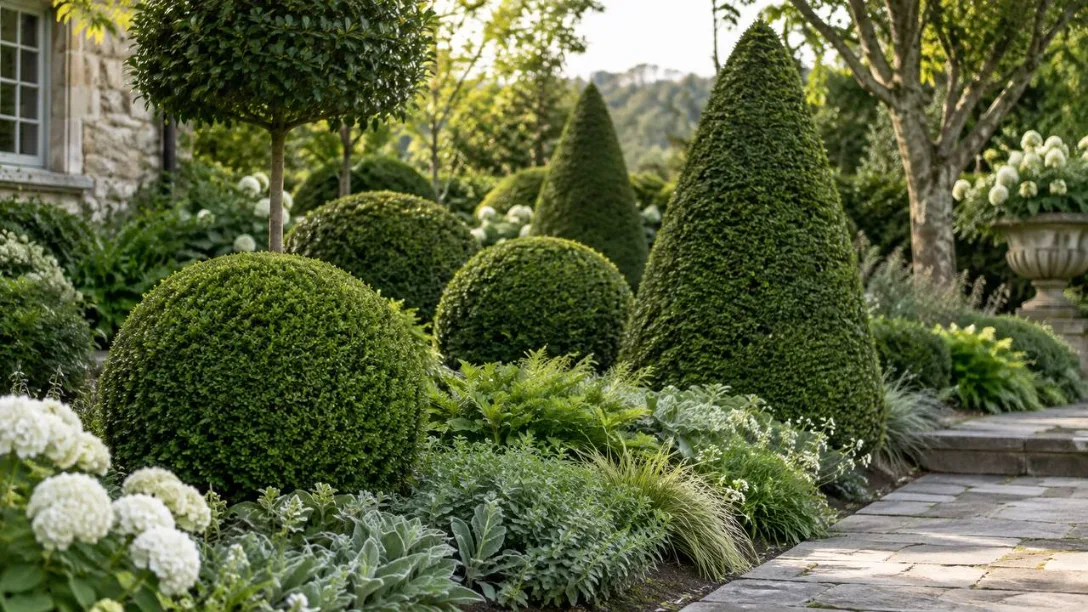
Formative pruning maintains the intended structure and silhouette of ornamental shrubs, hedges, boxwood, Thuja, junipers, ficus plants and many other species.
Selective thinning opens overly dense growth and improves access to light and air without destroying the plant's natural shape.
Some shrubs can be rejuvenated by removing part of the older wood to encourage strong new shoots. This technique is only suitable for species that respond well to renewal pruning.
Houseplants can lose balance because of one-sided light or long periods of unrestricted growth. Ficus, Dracaena, Philodendron, Pothos and many other plants can become more compact and visually balanced after careful shaping.
Indoor plant shaping considers light direction, bud position, overall plant health and the natural recovery ability of the species.
In offices, restaurants, hotels and showrooms, plants form part of the visual identity of the space. Regular professional shaping helps keep large plants and green compositions neat, proportional and appropriate for circulation areas.
Barberries, Spiraea, boxwood, hydrangeas, junipers and other shrubs have different growth and flowering patterns. They therefore require species-specific pruning methods.
Flowering time must be considered carefully to avoid removing the buds responsible for the next bloom.
Regular hedge trimming helps maintain density and a clear outline. The base is generally kept slightly wider than the top so that lower branches continue receiving sufficient light.
Thuja, junipers, pines and other conifers require careful pruning. Many do not regenerate well from old bare wood, so regular light shaping is generally safer than occasional severe cutting.
Early formative pruning of young trees helps establish a strong and stable crown structure. Mature trees are usually managed more conservatively, with emphasis on sanitary, safety and structural pruning.
Timing depends on the species, growth stage and intensity of the work. Many deciduous plants are structurally pruned near the end of dormancy or in early spring, while lighter corrections can be carried out during the growing season.
For flowering shrubs, it is essential to know whether flowers develop on old wood or new growth. Severe pruning during extreme heat or frost should generally be avoided.
Each species has a different growth biology. Some recover quickly after heavy pruning, while others may remain bare or weakened for a long time. Professional plant shaping therefore begins with correct plant identification.
Moderate pruning can improve overall plant condition, but excessive removal of foliage creates stress. Major structural changes are often safer when spread across several stages.
Sharp, clean pruning tools produce better cuts and reduce tissue damage. Tools should also be disinfected when working with diseased plants to reduce the risk of transferring pathogens.
Plants change as they mature. Formative pruning helps preserve the original logic of an interior or landscape design while adapting it to natural growth over time.
A well-shaped plant should complement the space rather than compete with it.
Plant shaping combines aesthetics with professional plant care. Correct formative and sanitary pruning can help preserve plant health, natural structure and ornamental value over the long term.
The best results come from shaping each plant according to its natural growth pattern, biology and the requirements of the surrounding space.