MAGHAKYAN BOTANIC
Maghakyan Botanic
Services
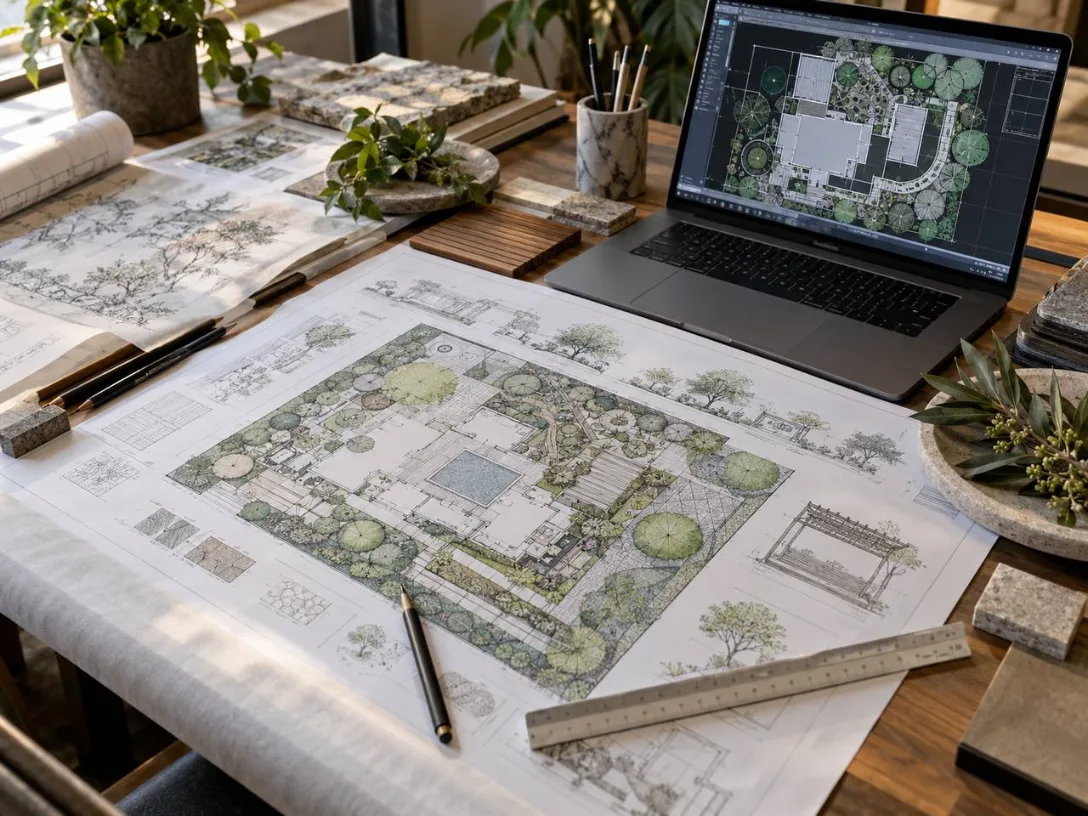
Successful landscaping begins with a plan rather than with purchasing plants. A Landscape Design Project establishes the logic of the entire site, from planting and circulation to irrigation, lighting, outdoor living areas and long-term maintenance.
Professional landscape planning helps identify opportunities and constraints in advance, avoid unsuitable planting decisions, calculate quantities more accurately and create a garden that continues to look balanced as it matures.
Our Landscape Design Project service is suitable for private homes, gardens, restaurants, hotels, office complexes, recreation areas and public spaces. Every project is developed individually according to site size, climate, terrain, soil, water availability, architecture, style and maintenance expectations.
Without a clear project, landscaping is often developed in separate pieces. A tree may later block a window, a shrub may outgrow its location, irrigation may be inefficient or different parts of the garden may feel disconnected.
A professional plan resolves these issues before major purchases and installation begin.
The first stage is understanding the site. Sun and shade, wind direction, terrain, soil condition, water access, existing structures and technical limitations are all reviewed.
Climate is equally important. A plant that performs well in Yerevan may behave very differently in Sevan, Dilijan or higher-altitude regions of Armenia.
Outdoor spaces are organized according to use. Zones may include outdoor dining, lounge areas, children's spaces, pool surroundings, barbecue or fire-pit areas, edible gardens, entrance areas, photo zones and service areas.
Plant selection is based on much more than appearance. Winter hardiness, heat tolerance, mature size, soil requirements, irrigation needs and susceptibility to pests and diseases are all considered.
A well-designed planting scheme creates layers, moving from major trees to shrubs, perennials, ornamental grasses and groundcovers.
Trees provide the main structure, shade and scale of a landscape. Their mature height and canopy width, distance from buildings and paths, root development and shade patterns should be considered before planting.
Shrubs and perennial plants bring volume, seasonal interest and color. They can form hedges, mixed borders, rock gardens and layered planting compositions.
Lawn should be used where it provides real function. Groundcovers, gravel, natural stone and mulch can be used elsewhere to reduce maintenance and create richer landscape texture.
Irrigation should ideally be planned together with the planting design. Trees, shrubs, flower beds and lawns have different watering requirements.
Drip irrigation is often suitable for planted beds, while sprinkler or rotor systems are typically used for lawns. Proper zoning improves water efficiency.
Lighting changes how the garden is experienced after sunset. It can highlight selected trees, paths, steps, water features and architectural elements while improving safety.
Natural stone, timber, gravel, mulch, metal details and planters should complement the architecture and overall design language of the property.
In small gardens, every square meter matters. Scale must be controlled carefully, and vertical planting, compact trees and repetition of a limited plant palette can make the space feel larger and more coherent.
Large sites require a strong overall structure. Visual axes, repeated planting groups, tree avenues, large shade trees and clearly defined functional areas help organize the space.
For restaurants, hotels, offices and public spaces, landscaping becomes part of the brand experience. Entrances, terraces, key views and photo areas can be designed to create a memorable and professional environment.
A good landscape project considers how the garden will be maintained in the future. For low-maintenance landscapes, resilient plants are prioritized, highly demanding forms are limited and automatic irrigation is planned from the beginning.
Professional planning brings architecture, planting, water, lighting, circulation and outdoor living together as one system. The result is not only attractive but also practical, climate-responsive and sustainable over time.
A Landscape Design Project is one of the most valuable investments in successful landscaping. It helps visualize the final result, manage the budget more effectively, select appropriate plants and prevent costly mistakes.
A well-designed landscape improves with age while maintaining its structure, function and visual quality.