MAGHAKYAN BOTANIC
Maghakyan Botanic
Plants
Basic Information
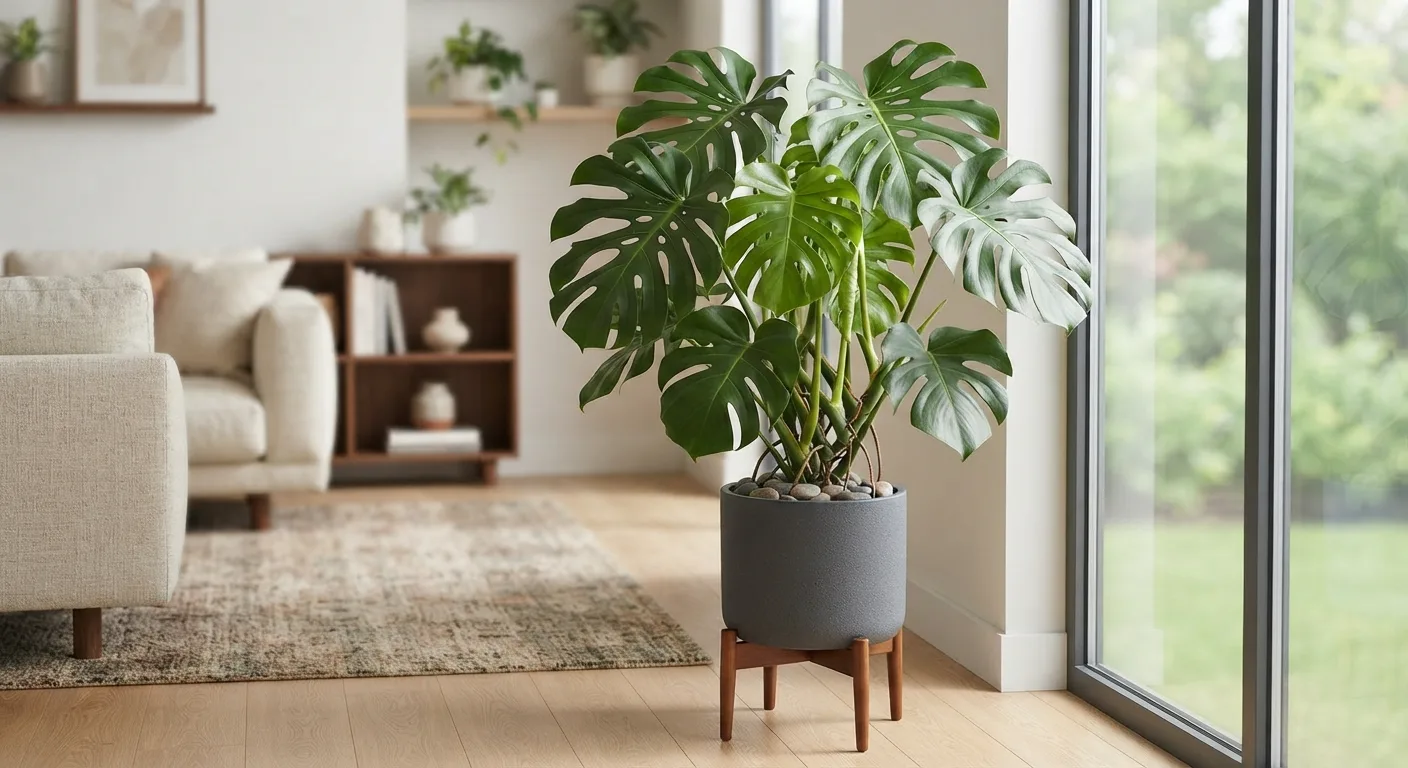
Monstera (Monstera deliciosa) is one of the most distinctive and popular indoor plants. It is known for its large, glossy leaves with characteristic splits and natural fenestrations that become more pronounced as the plant matures. Monstera is widely used in interior landscaping for homes, offices, hotels, restaurants, reception areas, and other large indoor spaces. Under suitable conditions, it grows relatively quickly, can reach an impressive size, and becomes a strong architectural feature within the interior. In its natural habitat, Monstera is a climbing plant, so indoors it benefits from a sturdy support or moss pole.
Light
Monstera performs best in bright, indirect light. Strong direct sunlight, especially during midday, may scorch the leaves. Prolonged low-light conditions can result in smaller new leaves, fewer splits and fenestrations, and slower growth. An east- or west-facing position is ideal, or a bright south-facing room with filtered light. Adequate lighting helps the plant produce larger, more mature leaves with the characteristic Monstera shape.
Watering
Monstera prefers moderate and consistent watering. Water when the top 3–4 cm of the potting mix has dried. Constantly wet soil can lead to root rot and yellowing leaves, while prolonged dryness may cause drooping and dry leaf margins. Watering frequency should be reduced during winter. Always use a container with good drainage holes and avoid allowing excess water to remain in the saucer.
Temperature and Humidity
An ideal temperature range for Monstera is approximately 18–28°C. The plant should be protected from cold drafts, sudden temperature fluctuations, and prolonged exposure to low temperatures. Moderately high humidity supports larger and healthier foliage, although Monstera can adapt to average indoor conditions. In very dry environments, leaf edges may become brown and crisp. Regularly wiping the leaves with a soft damp cloth helps maintain a healthy appearance.
Soil and Fertilization
Monstera requires a light, nutritious, airy, and well-draining potting mix. A quality foliage-houseplant substrate works well when amended with perlite, coco coir, pine bark, or similar structural materials. During the active growing season in spring and summer, a balanced indoor plant fertilizer can be applied approximately every 4–6 weeks according to the manufacturer's instructions. Feeding should be reduced or paused during autumn and winter.
Important Care Tips
As Monstera matures, provide a sturdy support and enough space for its expanding foliage. Aerial roots do not need to be removed completely; they can be guided toward the soil or support. Clean the leaves regularly and remove yellow or damaged foliage. If new leaves remain small or do not develop splits, review the light level and plant nutrition. Widespread yellowing is often associated with overwatering. Thanks to its bold architectural foliage and long-lasting decorative value, Monstera is one of the best indoor plants for professional interior landscaping, especially in spacious and well-lit environments.