MAGHAKYAN BOTANIC
Maghakyan Botanic
Plants
Basic Information
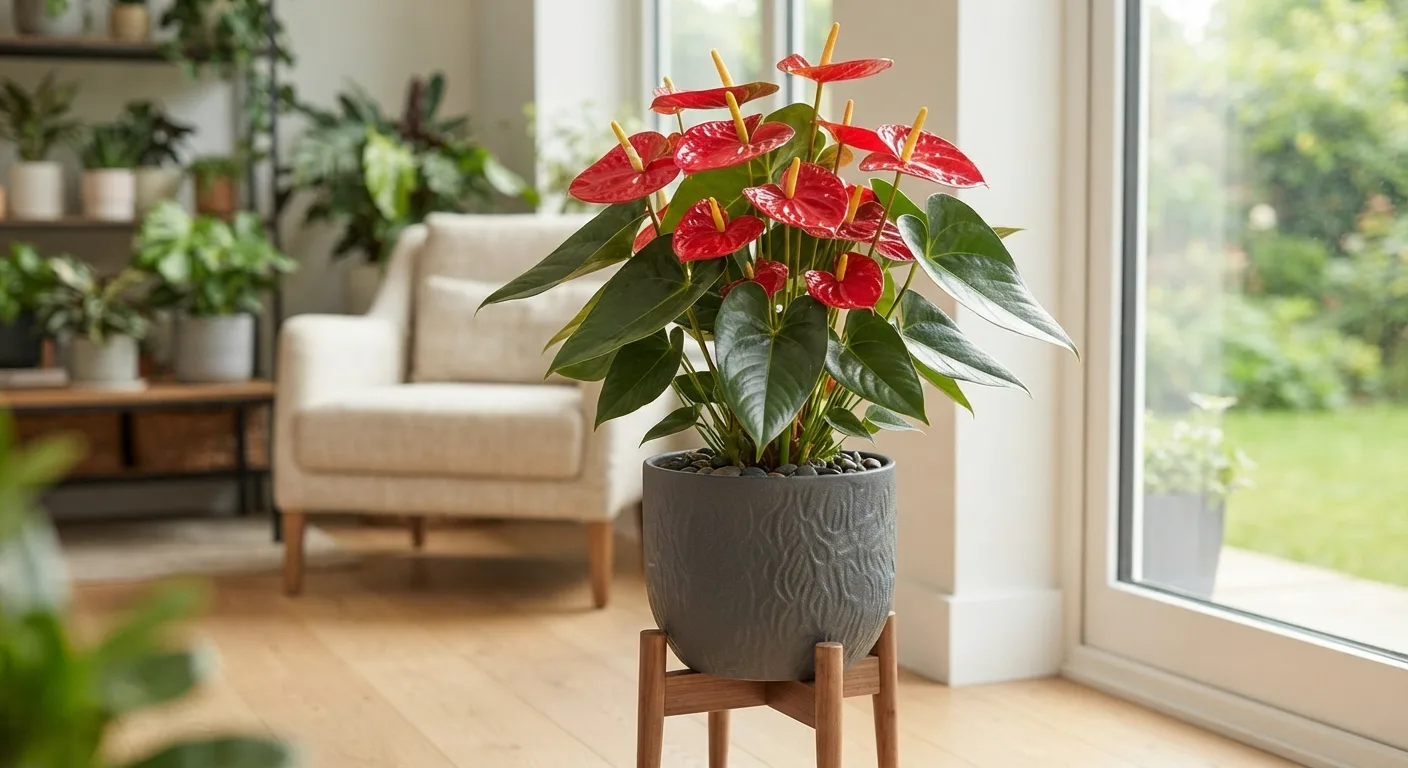
Anthurium (Anthurium andraeanum) is one of the most popular flowering indoor plants, valued for its glossy dark-green foliage and long-lasting colorful inflorescences. The showy structure commonly perceived as the flower is actually a colored spathe surrounding the central spadix and may be red, pink, white, or other shades. Anthurium is widely used in interior landscaping, phytodesign, hotels, offices, medical centers, and residential interiors. Under suitable conditions, it can remain decorative throughout the year and produce new blooms repeatedly.
Light
Anthurium prefers bright, indirect light. Strong direct sunlight can scorch the foliage and create dry brown patches, while prolonged low-light conditions may reduce or completely stop flowering. An east- or west-facing position is usually ideal. Near a south-facing window, protect the plant from intense midday sun. In darker interiors, supplemental grow lighting may be helpful to support healthy growth and reliable flowering.
Watering
Correct watering is one of the most important aspects of Anthurium care. The potting mix should remain lightly and evenly moist, but never waterlogged. Water when the top 2–3 cm of the substrate begins to dry. Excess water can cause root rot, yellowing leaves, and general decline, while prolonged dryness can lead to wilting and shorter-lasting flowers. Use room-temperature water whenever possible, preferably with low mineral content, and always ensure excellent drainage.
Temperature and Humidity
As a tropical plant, Anthurium performs best at approximately 20–28°C. It is sensitive to cold drafts, direct air-conditioning airflow, and sudden temperature fluctuations. Relative humidity of around 50–70% is ideal. In very dry air, leaf margins may become brown and flowering may weaken. Humidity can be improved with a room humidifier or by grouping several indoor plants together.
Soil and Fertilization
Anthurium requires a light, airy, and well-draining potting mix. A structured aroid mix containing bark, coco coir, perlite, and a peat-based component works well. The roots need access to oxygen, so heavy soil that remains wet for long periods should be avoided. From spring through early autumn, during active growth and flowering, a balanced fertilizer for flowering indoor plants may be applied approximately every 4–6 weeks according to the product label.
Important Care Tips
Remove spent blooms and damaged leaves regularly, and wipe healthy foliage with a soft damp cloth to keep it clean. Avoid moving the plant into an excessively large pot, as a slightly snug root environment often supports more stable growth and flowering. Yellow leaves commonly indicate problems with watering or drainage. If the plant produces new foliage but few or no blooms, insufficient light or unbalanced nutrition may be the cause. With consistent care, Anthurium can remain healthy, elegant, and highly decorative for many years, making it an excellent choice for professional interior landscaping.