MAGHAKYAN BOTANIC
Maghakyan Botanic
Plants
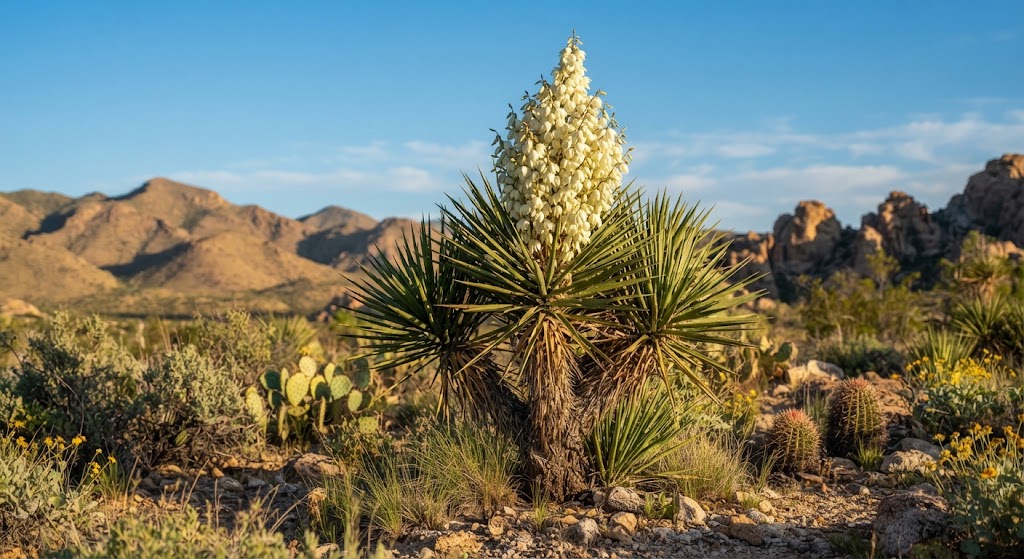
Yucca (Yucca spp.) is a striking evergreen ornamental plant valued for its strong architectural form and excellent performance in landscape design, drought-tolerant gardens, rock gardens and contemporary planting schemes. It develops a dense rosette of stiff, elongated and often sharply pointed leaves, while mature plants may produce tall flower stalks covered with white or creamy bell-shaped blooms during summer. Yucca is appreciated not only for its distinctive appearance but also for its durability, drought tolerance and relatively low maintenance requirements. Hardy landscape species such as Yucca filamentosa are commonly grown outdoors, while other species are better suited to warmer climates or container cultivation. Selecting the correct species and planting site is essential for long-term health and reliable garden performance.
Yucca is a sun-loving plant and performs best in full sun. Ideally, it should receive at least 6–8 hours of direct sunlight each day. Strong light encourages compact growth, firm foliage and better flowering. Yucca can tolerate light partial shade, but plants grown with insufficient sun often become less dense and may flower less freely. Deep shade is generally unsuitable, particularly for outdoor landscape plantings.
Yucca is well known for drought tolerance, but newly planted specimens require regular, moderate watering during their first growing season while the root system becomes established. Allow the soil to dry partially between waterings. Mature, established plants usually need supplemental irrigation only during prolonged hot and dry periods. The most important rule is to prevent waterlogging, because constantly wet soil can lead to root and crown rot. Deep, occasional watering is generally more beneficial than frequent shallow irrigation and encourages a stronger root system.
Cold tolerance varies considerably among Yucca species. Hardy garden types can overwinter successfully in cold climates when planted in well-drained soil, especially where winter moisture does not accumulate around the roots. Most yuccas tolerate hot, dry summers very well. High atmospheric humidity is not required, and prolonged damp conditions combined with poor air circulation may increase the risk of fungal problems. Young outdoor plants can benefit from a protective mulch over the root zone during their first winter in colder locations.
Yucca grows best in light, free-draining soil. Heavy clay or soils that retain water for long periods should be improved with coarse sand, fine gravel or other drainage-enhancing material. A slightly acidic to slightly alkaline soil reaction is generally acceptable as long as drainage is excellent. Yucca does not require heavy feeding. A moderate application of balanced fertilizer or a slow-release formulation in spring is usually sufficient. Excessive nitrogen should be avoided because it can encourage overly soft growth and reduce the plant's natural resilience.
The key to successful Yucca care is combining a sunny planting position with excellent drainage. Avoid low areas where rainwater or irrigation water remains around the root zone. Old, dry or damaged lower leaves can be removed to keep the plant neat and attractive. Once flowering has finished, the spent flower stalk can be cut back near its base. Because many Yucca species have sharply pointed leaves, they should not be planted directly beside narrow pathways, entrances or active children's areas. With correct planting and minimal but appropriate maintenance, Yucca can remain attractive for many years and provide a strong structural accent in landscape compositions.