MAGHAKYAN BOTANIC
Maghakyan Botanic
Plants
General Information
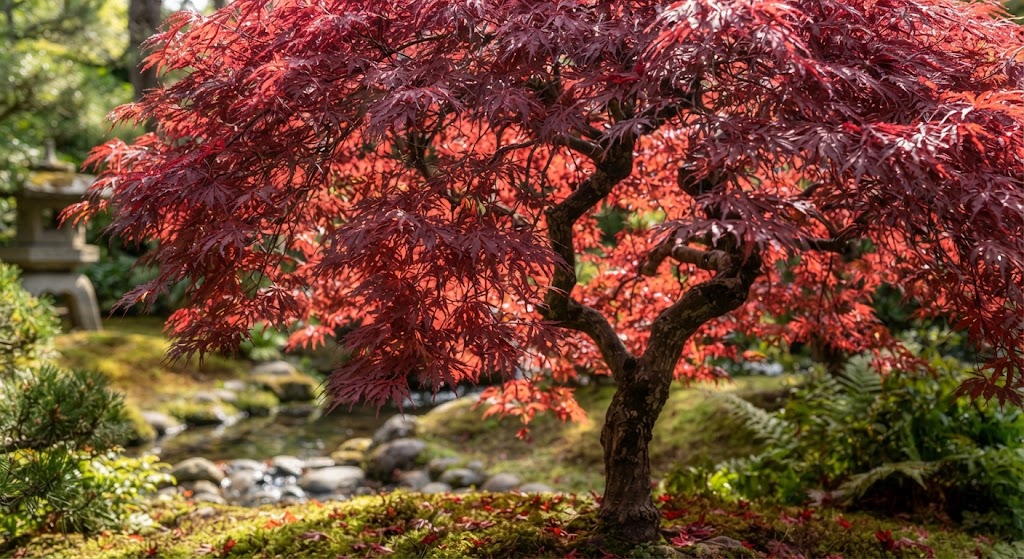
The red Japanese maple (Acer palmatum, red-leaved cultivars) is a highly ornamental deciduous small tree or large shrub valued for its elegant branching, delicate foliage and exceptional seasonal color. Depending on the cultivar, leaves may appear deep red, burgundy, purple or bright crimson, often becoming even more vivid in autumn.
Red Japanese maples are widely used in landscape design, Japanese-style gardens, courtyards, rock gardens, near water features, at entrances and as specimen plants. They combine beautifully with conifers, hydrangeas, hostas, liriope and compact ornamental shrubs. Acer palmatum is particularly effective where a refined architectural shape and strong foliage color are needed without the scale of a large shade tree.
Light Requirements
A red Japanese maple performs best in a bright position with some protection from intense midday sun. Morning sun followed by light afternoon shade is ideal, especially in climates with hot, dry summers.
Excessive direct sunlight can scorch leaf margins, particularly on young plants and delicate red-leaved cultivars. On the other hand, deep shade may reduce the intensity of red foliage. A sheltered site with filtered light and protection from strong winds usually produces the healthiest and most attractive growth.
Watering
Japanese maples prefer evenly moist soil but do not tolerate prolonged waterlogging. During the first years after planting, regular deep watering is important so that the root ball never dries out completely. Irrigation should be increased during hot summer periods, especially for plants in sunny positions or containers.
Deep, less frequent watering is more effective than constant shallow irrigation. Apply water directly to the root zone in the early morning or evening. Organic mulch around the base helps retain moisture, moderate soil temperature and protect the shallow root system from overheating.
Temperature and Humidity
Acer palmatum prefers a temperate climate and performs best where extreme summer heat is not prolonged. Cold tolerance varies among cultivars, and young plants or recently planted specimens may need winter protection during their first seasons, especially from cold, drying winds.
Crispy or brown leaf edges are not always caused by lack of water alone; low humidity, wind exposure and extreme heat can also be responsible. A protected microclimate combined with consistent soil moisture helps maintain healthy foliage and strong ornamental quality.
Soil and Fertilization
Red Japanese maples grow best in loose, organic-rich, well-drained soil with a slightly acidic to neutral reaction. Heavy, highly alkaline or permanently saturated soils should be avoided. At planting time, incorporating mature compost and organic matter can improve soil structure and root development.
A balanced slow-release fertilizer may be applied in spring at a moderate rate. Excessive nitrogen should be avoided because it encourages soft, rapid growth and may reduce the intensity of foliage color. Maintaining healthy soil structure and avoiding root disturbance are more important than heavy feeding.
Important Care Tips
Pruning should be light and selective. Remove dead, damaged, weak or crossing branches rather than heavily reshaping the canopy. The natural branching habit of Acer palmatum is one of its greatest landscape qualities, so strong formative pruning is rarely necessary.
Choose a planting site protected from harsh summer sun and strong winds. Avoid digging deeply around the root zone because Japanese maples have relatively shallow, sensitive roots. Maintain a 5–7 cm layer of mulch, keeping it away from direct contact with the trunk.
With correct placement, consistent irrigation and gentle maintenance, a red Japanese maple becomes one of the most distinctive plants in a garden, providing refined structure, vivid color and a premium landscape appearance throughout much of the growing season.