MAGHAKYAN BOTANIC
Maghakyan Botanic
Plants
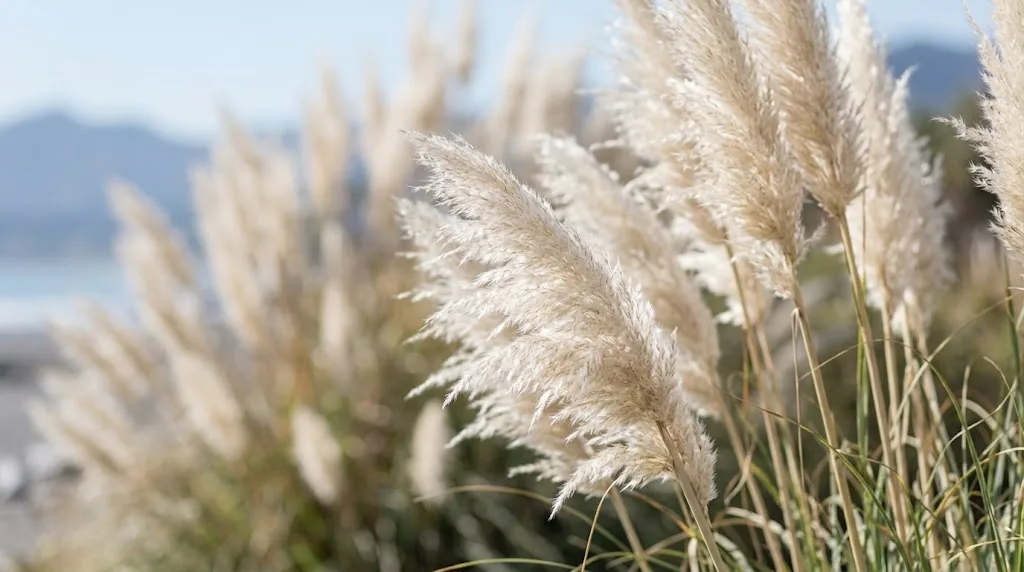
Pampas grass (Cortaderia selloana) is a large perennial ornamental grass widely used in contemporary landscape design. It forms a bold clump of long arching leaves and, from late summer into autumn, produces tall, soft, feathery plumes. Pampas grass is especially striking in spacious gardens, minimalist landscapes, poolside planting schemes, gravel gardens and as a dramatic specimen plant. Depending on the cultivar and growing conditions, a mature plant commonly reaches about 1.5–3 m in height. It is valued for its architectural shape, long seasonal interest and relatively low maintenance once established.
Pampas grass performs best in full sun. For strong growth and abundant flower plumes, choose a site that receives at least 6–8 hours of direct sunlight each day. The plant can tolerate light partial shade, but flowering is usually reduced and the clump may become less dense. A sunny position also helps foliage dry more quickly after rain or irrigation, reducing the risk of fungal problems.
During the first growing season after planting, Cortaderia selloana benefits from regular deep watering while its root system becomes established. The soil should be thoroughly moistened without remaining waterlogged. Mature plants are relatively drought tolerant and can withstand short dry periods, although deep irrigation during prolonged heat helps maintain healthy foliage and strong plume development. In general, less frequent but thorough watering is preferable to frequent shallow watering.
Pampas grass thrives in warm, sunny conditions and generally prefers moderate to low atmospheric humidity. Many cultivars tolerate light to moderate winter frosts, but young plants in colder areas benefit from a protective mulch over the root zone. Prolonged winter wetness is often more damaging than brief cold spells, making good drainage especially important. In humid climates, adequate air circulation around the clump is beneficial.
Pampas grass grows best in light, well-drained and moderately fertile soil. It adapts to several soil types as long as water does not remain around the roots for long periods. Heavy clay soils should be improved with structural amendments and better drainage before planting. A balanced slow-release fertilizer or a modest amount of mature compost can be applied in spring. Excessive nitrogen should be avoided because it may encourage lush leaf growth at the expense of flowering.
Cut back old, dry foliage in early spring before new growth begins, leaving approximately 20–40 cm above soil level. Wear thick gloves and protective clothing because the leaf margins can be very sharp. Allow enough space for the mature clump when selecting a planting site. Dried plumes may be left in place for winter interest or removed if preferred. Older, overcrowded clumps can be divided and rejuvenated. It is also important to check local regulations before planting, as pampas grass is considered invasive in some regions. With full sun, good drainage and appropriate seasonal maintenance, Cortaderia selloana can provide a dramatic, long-lasting focal point in landscape design.