MAGHAKYAN BOTANIC
Maghakyan Botanic
Plants
Basic Information
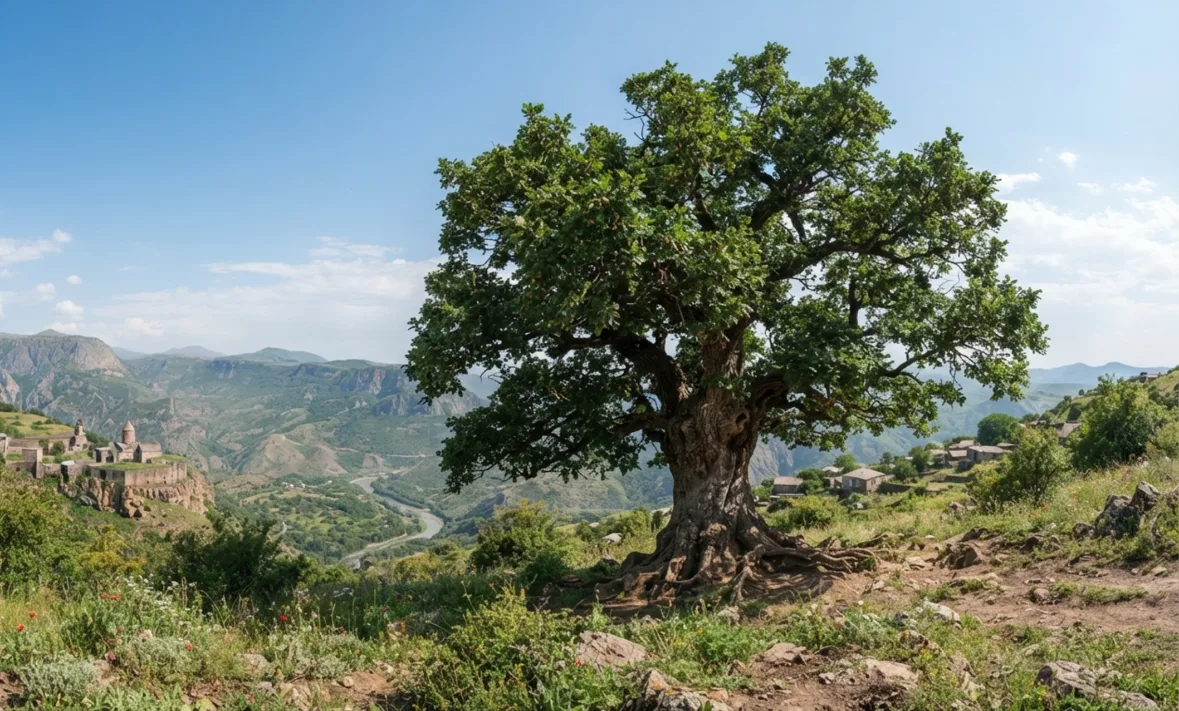
Oak (Quercus spp.) is a large group of long-lived, powerful, and highly ornamental trees that play an important role in natural forests, landscape design, and urban greening. Oaks are valued for their strong wood, broad shade-producing canopies, distinctive structure, and exceptional longevity. Height, growth rate, and crown form vary considerably between species, but most oaks eventually develop into substantial structural trees. They are particularly suitable for large gardens, parks, private properties, residential developments, and public green spaces where a long-term landscape framework is required.
Light
Most oak species perform best in full sun. Young trees of some species can tolerate light partial shade, but at least 6 hours of direct sunlight per day is generally recommended for strong, balanced crown development. Insufficient light may result in slower growth, a thinner canopy, and elongated shoots. When planting an oak, always consider its mature size and ensure that the future tree will have enough open space and sunlight.
Watering
Newly planted oak trees require regular deep watering during the first few years while their root systems become established. Watering should be less frequent but thorough, allowing moisture to reach deeper parts of the root zone. Water again once the upper soil layer has dried noticeably. Mature, well-established oaks are generally more tolerant of short dry periods, although supplemental watering during prolonged heat and drought helps maintain healthy foliage and stable growth.
Temperature and Humidity
Temperature tolerance varies by oak species. Many oaks are well adapted to temperate climates and can withstand both winter cold and summer heat. Always select a species or cultivar suited to the local climate. Oaks do not usually require high atmospheric humidity; good airflow, a healthy root zone, and balanced soil moisture are far more important for long-term tree health.
Soil and Fertilization
Oak trees generally prefer deep, structured, well-draining soil that allows the root system to develop freely. Many species can adapt to a range of soil types, but heavy, permanently waterlogged, or severely compacted soils may restrict growth and contribute to root problems. Improving soil structure and drainage before planting can greatly support establishment. Healthy mature oaks usually do not require intensive fertilization. Young trees may receive a balanced fertilizer only when needed, while excessive nitrogen should be avoided.
Important Care Tips
Choosing the correct planting location is one of the most important aspects of oak care. Allow sufficient distance from building foundations, underground utilities, and areas where a mature crown could become restrictive. Organic mulch around young trees helps conserve soil moisture and suppress weeds, but it should not touch the trunk base. Structural pruning is best carried out while the tree is young, removing damaged, crossing, or poorly oriented branches. Heavy pruning of mature oaks should only be performed when necessary and preferably under professional supervision. Inspect the crown, bark, and foliage regularly for early signs of pests or disease. With appropriate species selection, correct planting, and professional tree care, an oak can remain healthy, impressive, and valuable in the landscape for many decades.