MAGHAKYAN BOTANIC
Maghakyan Botanic
Plants
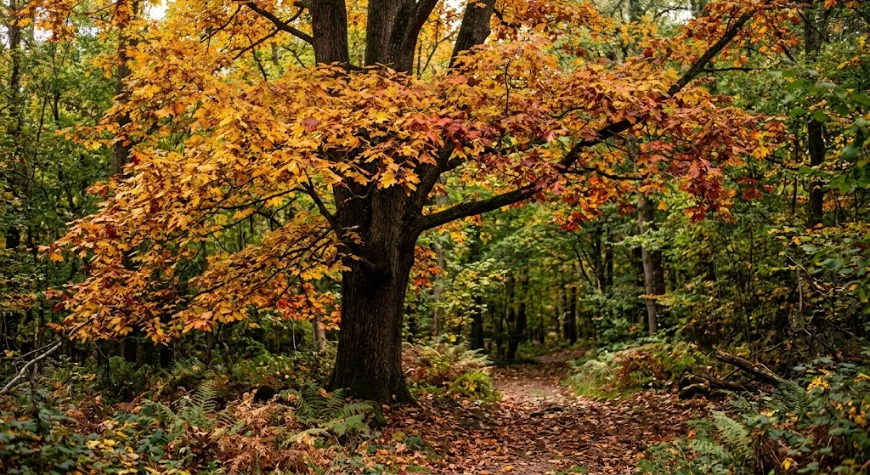
Norway maple (Acer platanoides) is a large deciduous tree valued for its broad, dense crown, strong structure and ornamental appearance. It is widely used in landscape design, urban landscaping, parks, gardens, residential grounds and spacious streetscapes. In spring and summer, the tree produces rich green foliage, while in autumn the leaves commonly turn yellow, golden and sometimes orange. Norway maple is relatively fast growing and, when properly planted and maintained, can serve as a long-lived shade and structural tree in large landscape projects.
A mature Acer platanoides develops a substantial canopy and a strong root system, so the planting location should be selected with its future size in mind. It performs best in open areas where both the crown and roots have enough room to expand without constant restriction.
Norway maple grows best in full sun or light partial shade. Good light exposure helps create a dense, balanced canopy and usually enhances autumn leaf colour. Ideally, the tree should receive at least 5–6 hours of direct or bright sunlight each day. It can tolerate some shade, but prolonged deep shade may result in slower growth and a thinner canopy.
During the first 2–3 years after planting, regular deep watering is especially important. Water should penetrate the active root zone while prolonged waterlogging should be avoided. Young trees require more frequent irrigation during hot, dry summer periods, particularly when newly planted or exposed to strong sun. Established Norway maples are relatively tolerant of short periods of drought, but extended moisture stress can cause leaf-edge scorch and premature leaf drop. Deep watering at sensible intervals is more effective than frequent shallow irrigation because it encourages deeper root development.
Acer platanoides is a cold-hardy tree that adapts well to cold winters and moderately warm summers. Mature specimens tolerate considerable seasonal temperature variation. For young trees, applying organic mulch around the root zone helps reduce rapid moisture loss, protects the soil from excessive summer heat and moderates winter temperature fluctuations. In very hot and dry conditions, supplemental watering is important for maintaining healthy foliage and steady growth.
Norway maple prefers fertile, moderately moist and well-drained soil. It can adapt to loamy and several other soil types as long as water does not remain stagnant around the roots for long periods. At planting time, mature compost or good-quality organic matter can be incorporated to improve soil structure and nutrient availability. A balanced fertilizer formulated for ornamental trees may be applied in spring. Excessive nitrogen should be avoided because it can encourage overly soft, weak or elongated growth.
When planting a Norway maple, allow enough space from buildings, walls, paved surfaces and underground utilities to accommodate the future canopy and root system. Young trees benefit from formative pruning to establish a strong central leader and a well-balanced framework of structural branches. Sanitary pruning should remove dead, damaged or crossing branches. Keep the root zone relatively free of weeds and apply a 5–8 cm layer of organic mulch, leaving a clear gap around the trunk. With proper site selection, regular irrigation and professional tree care, Acer platanoides can become a durable landscape feature that provides broad shade, strong visual structure and long-term ornamental value.