MAGHAKYAN BOTANIC
Maghakyan Botanic
Plants
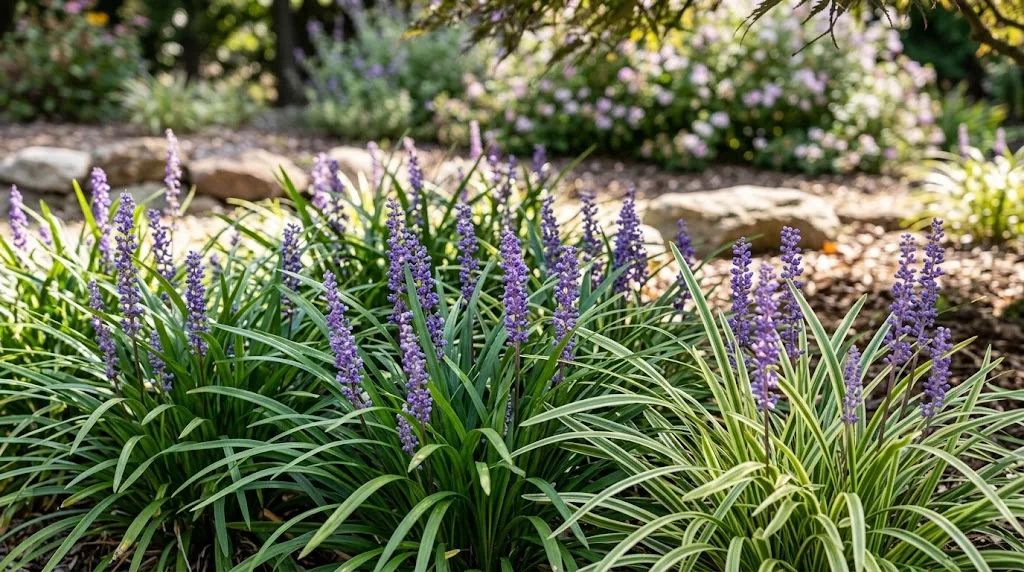
Liriope muscari is a clump-forming perennial ornamental plant valued for its dense, narrow foliage and attractive purple to lavender flower spikes that appear from late summer into autumn. In landscape design, liriope is widely used for borders, shaded garden areas, planting beneath trees, pathway edging and mass planting. Its compact growth habit allows it to function as an effective ground cover, helping suppress weeds while maintaining a neat and structured appearance. Because it is adaptable and relatively low-maintenance, liriope is suitable for both private gardens and larger landscaping projects.
Liriope performs best in partial shade or bright filtered shade, although it can also grow in full sun when soil moisture is adequate. In hot climates, intense afternoon sunlight may cause leaf-tip scorch or fading. A site with morning sun and light afternoon shade is often ideal. Plants can survive in deeper shade, but flowering may be reduced.
Newly planted liriope should be watered regularly until a strong root system is established. Mature plants are reasonably tolerant of short dry periods, but additional irrigation is beneficial during prolonged heat or drought. Deep, moderate watering is preferable, allowing the upper layer of soil to dry slightly between applications. Constantly waterlogged soil should be avoided because it can encourage root rot and fungal problems.
Liriope muscari adapts well to a range of growing conditions, and established plants can tolerate cold weather. During hot, dry summers, maintaining moderate soil moisture becomes especially important for newly planted specimens. Applying mulch around the root zone helps regulate soil temperature, conserve moisture and suppress weed growth.
Liriope grows best in fertile, loose and well-drained soil with a slightly acidic to neutral pH. It can adapt to heavier soils as long as drainage is adequate. Incorporating mature compost or organic matter at planting improves soil structure and nutrient availability. In spring, a balanced slow-release fertilizer may be applied to support fresh foliage and flowering. Excessive nitrogen should be avoided because it may promote lush leaf growth at the expense of flowers.
In early spring, remove old, dry or damaged foliage to make room for fresh new growth. When planting liriope in groups, allow enough spacing for air circulation and future expansion. Overgrown clumps can be divided every few years to rejuvenate the planting and produce additional plants. Liriope is particularly effective in shade gardens, beneath trees and shrubs, along paths and as edging around lawns or planting beds. With proper irrigation, good drainage and light seasonal maintenance, it can remain attractive and dense for many years while providing reliable structure in the landscape.