MAGHAKYAN BOTANIC
Maghakyan Botanic
Plants
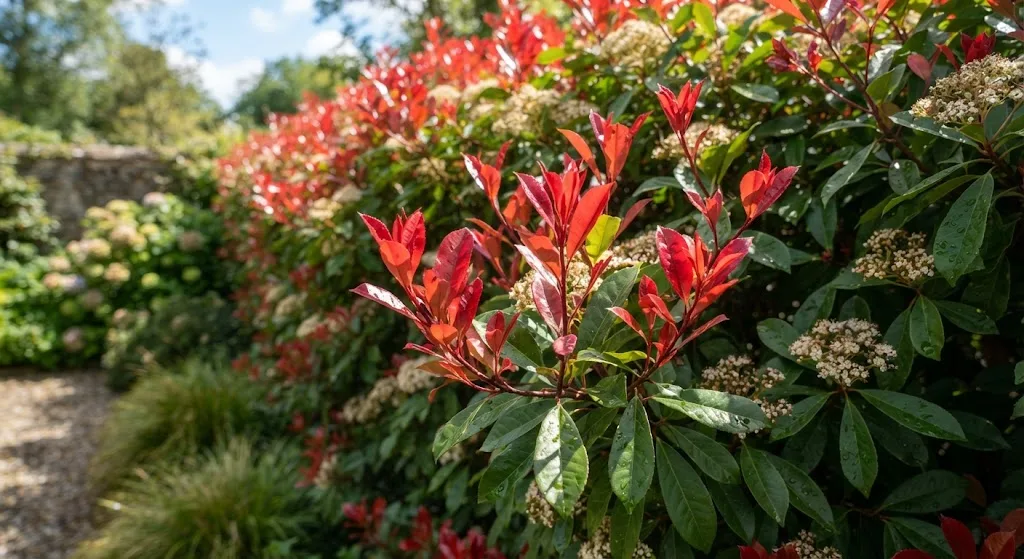
Fraser photinia (Photinia × fraseri) is an attractive evergreen to semi-evergreen ornamental shrub prized for its vivid red new growth and glossy green foliage. It is widely used in landscape design for hedges, screening, group plantings, feature shrubs, entrance areas and contemporary gardens. In spring, newly emerging leaves often appear bright red or bronze-red before maturing to a deep glossy green. The plant may also produce clusters of small white flowers, adding seasonal interest. With the right site and proper care, Fraser photinia grows relatively quickly, responds well to formative pruning and can develop into a dense, colorful living screen. Its combination of foliage color, structure and versatility makes it especially useful in residential and commercial landscaping.
Fraser photinia performs best in full sun to light partial shade. Strong sunlight helps intensify the red coloration of new leaves and encourages compact, dense growth. In deep shade, shoots may become elongated, foliage color can be less vivid and the shrub may lose some of its ornamental impact. In very hot and dry climates, young plants may benefit from light protection during the hottest part of the day, particularly during establishment.
During the first 1–2 years after planting, Photinia × fraseri should be watered regularly and evenly. The soil should remain moderately moist but never permanently waterlogged, as standing water can damage the root system. In hot summer weather, deep irrigation is preferable to frequent shallow watering because it encourages stronger root development. Established shrubs can tolerate short dry periods, but consistent moisture generally supports healthier foliage, stronger growth and a better flush of decorative red shoots.
Fraser photinia prefers mild to warm growing conditions and locations protected from harsh, cold winds. Young plants are more sensitive to severe frost, so mulching the root zone and choosing a sheltered planting site can be beneficial during the first years. High atmospheric humidity is not essential. In fact, persistently wet foliage combined with poor air circulation can increase the risk of fungal leaf diseases. Appropriate spacing and careful irrigation therefore play an important role in maintaining healthy plants.
Photinia × fraseri grows best in fertile, well-drained soil with a slightly acidic to neutral pH. Heavy clay soils should be improved with organic matter and adequate drainage to prevent prolonged water saturation. Incorporating mature compost at planting can improve soil structure and nutrient availability. In spring, a balanced fertilizer formulated for ornamental shrubs may be applied to support healthy foliage and new growth. Excessive nitrogen should be avoided because it can produce overly soft growth and reduce the plant’s overall resilience.
Regular formative and sanitary pruning is one of the most important aspects of Fraser photinia care. When grown as a hedge, light trimming can be carried out several times during the growing season to maintain shape and stimulate fresh red growth. Remove dead, damaged, crossing or congested branches to improve airflow through the canopy. If dark leaf spots appear, review watering practices, spacing and air circulation, and assess the possibility of fungal disease. Applying a 5–7 cm layer of organic mulch around the root zone helps conserve soil moisture and suppress weeds, but mulch should not be piled directly against the stems. With good planting conditions and proper maintenance, Fraser photinia becomes a long-lasting, colorful and highly functional shrub for hedging, screening and modern landscape design.