MAGHAKYAN BOTANIC
Maghakyan Botanic
Blog
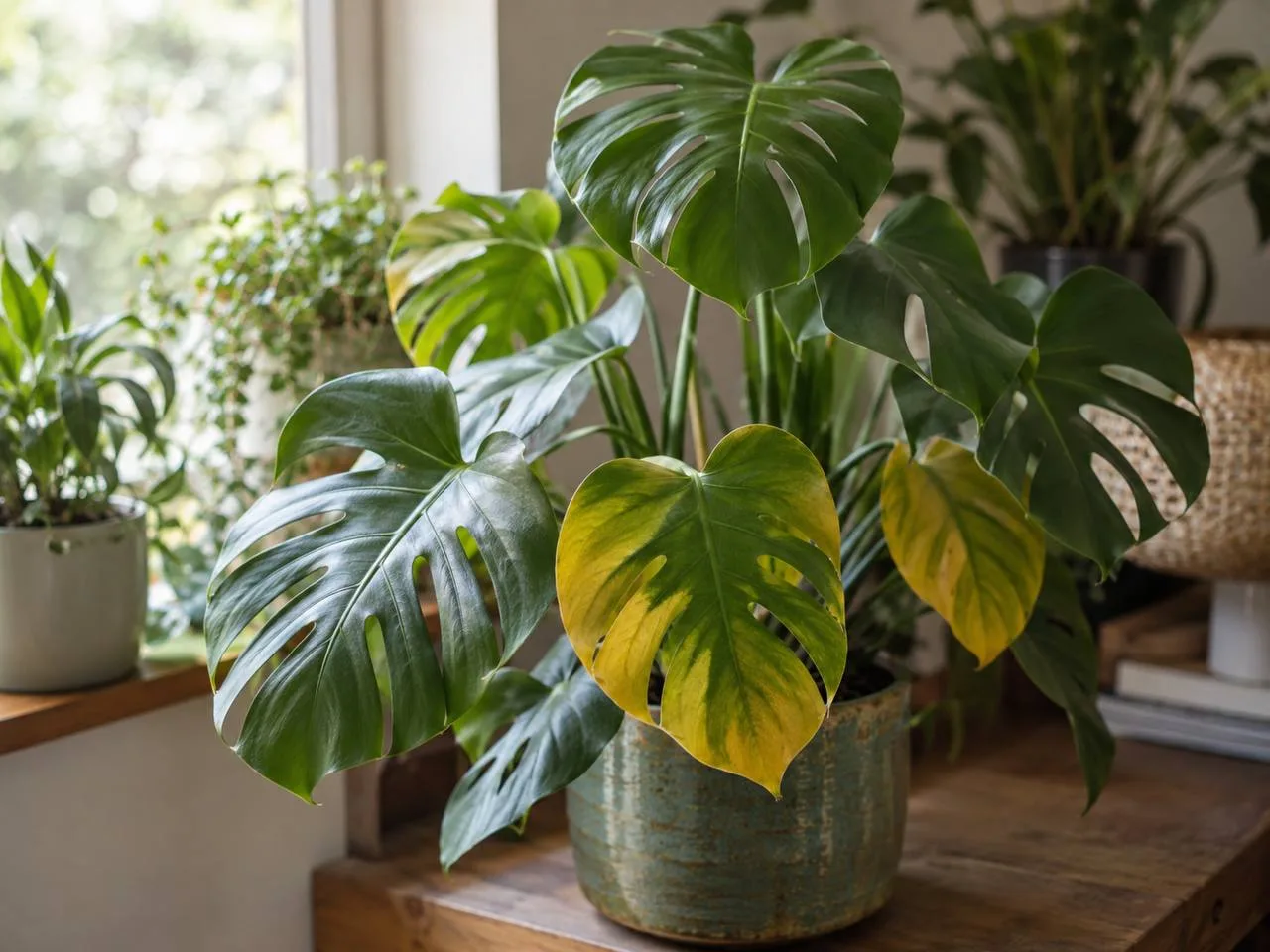
Yellowing leaves are one of the most common problems experienced by indoor plant owners.
A few yellow leaves do not always indicate a serious problem. In some cases, older leaves naturally age, turn yellow and eventually fall as the plant produces new growth.
However, if yellowing spreads quickly, affects young foliage or occurs together with wilting, leaf spots, dry edges or excessive leaf drop, the underlying cause should be identified.
In many cases, the problem is related to growing conditions and can be corrected once the cause is properly diagnosed.
Overwatering
Overwatering is one of the most common causes of yellow leaves on houseplants.
When soil remains constantly wet, the amount of oxygen available around the roots decreases.
Roots may gradually lose their ability to function properly, and prolonged waterlogging can lead to root rot.
As a result, the plant may struggle to absorb both water and nutrients.
Signs of overwatering
• soft yellow leaves;
• soil that remains wet for a long time;
• unpleasant smell from the potting mix;
• drooping foliage;
• dark or soft roots;
• excessive leaf drop.
Solution
Stop watering temporarily and allow the potting mix to dry.
If root rot is suspected, remove the plant from the pot, trim damaged roots and repot it into fresh, well-draining soil.
Always make sure the container has drainage holes.
Underwatering
A lack of water can also cause leaves to turn yellow.
When a plant remains too dry for an extended period, it loses moisture and leaves begin to lose their firmness.
Older leaves may turn yellow, become dry and eventually fall.
Signs of underwatering
• very dry potting soil;
• unusually light container;
• drooping leaves;
• dry leaf edges;
• yellowing of older leaves.
Solution
Water the plant gradually.
If the potting mix has become extremely dry, water may simply run down the sides without properly moistening the root ball.
In this situation, water in several smaller amounts or briefly use bottom watering, allowing the soil to absorb moisture from below.
Too Little Light or Too Much Direct Sun
Light is essential for healthy plant growth and photosynthesis.
When a plant does not receive enough light, growth may slow down and leaves can become pale or yellow.
On the other hand, intense direct sunlight may cause leaf scorch.
Signs of insufficient light
• elongated growth;
• smaller new leaves;
• faded foliage;
• yellowing lower leaves.
Signs of sunburn
• pale yellow or whitish patches;
• dry damaged areas;
• brown leaf edges;
• damage mainly on the side facing the sun.
Solution
Move the plant to a location with more appropriate lighting.
Bright indirect light is suitable for many common houseplants.
If moving a plant into stronger sunlight, introduce the change gradually so the leaves have time to adapt.
Nutrient Deficiency or Soil Problems
Yellow leaves can also indicate nutrient-related issues.
Deficiencies of nitrogen, iron, magnesium and other essential elements may cause different types of yellowing.
For example, nitrogen deficiency often affects older leaves first.
Iron deficiency may cause younger leaves to turn yellow while the veins remain greener for some time.
Possible causes
• lack of fertilization;
• old or depleted potting mix;
• unsuitable soil pH;
• damaged roots;
• salt buildup in the soil.
Solution
Avoid applying extra fertilizer without identifying the cause.
During the active growing season, use an appropriate balanced fertilizer according to the manufacturer's instructions.
If the potting mix is old or compacted, repotting into fresh soil may also be necessary.
Pests and Diseases
Pests are another common reason why houseplant leaves turn yellow.
Common indoor plant pests include:
• spider mites;
• mealybugs;
• scale insects;
• thrips;
• whiteflies;
• aphids.
These pests feed on plant tissues and sap, gradually weakening the plant.
Warning signs
• tiny yellow spots;
• sticky residue;
• fine webbing;
• white cotton-like material;
• distorted leaves;
• rapid yellowing and leaf drop.
Solution
Isolate the affected plant from other indoor plants.
Carefully inspect both sides of the leaves, especially the undersides.
Minor infestations may sometimes be managed by physically removing pests and applying an appropriate plant protection treatment.
For more severe infestations, treatment should be selected according to the specific pest.
Cold Drafts
Many tropical indoor plants are sensitive to cold air and sudden temperature changes.
Low Humidity
Very dry indoor air can cause leaf tips and margins to turn yellow or brown.
Root-Bound Plants
When roots completely fill the pot, the plant may have difficulty accessing sufficient water and nutrients.
Natural Leaf Aging
If only one or two older lower leaves are turning yellow while new growth remains healthy, the process may be completely normal.
Before applying fertilizer or pesticides, check the plant systematically.
Review:
1. Soil moisture.
2. Drainage.
3. Light conditions.
4. Both sides of the leaves.
5. The root system if the problem continues.
6. Fertilizing and repotting history.
Healthy Indoor Plants depend on consistent care and suitable growing conditions.
To reduce the risk of yellowing leaves:
• water according to soil moisture rather than a fixed calendar;
• provide appropriate light;
• use well-draining potting soil;
• remove dust from leaves regularly;
• inspect plants for pests;
• fertilize moderately during active growth;
• repot when necessary.
When leaves turn yellow, many people immediately reach for fertilizer.
However, if the real problem is overwatering, damaged roots or pest infestation, extra fertilizer will not solve the issue and may make it worse.
Yellow leaves are usually a visible symptom of an underlying problem.
Successful plant care depends on identifying and correcting that underlying cause.
Yellow leaves on houseplants are a symptom rather than a disease.
The five most common causes are overwatering, underwatering, incorrect lighting, nutrient deficiency or soil problems, and pests and diseases.
Correct diagnosis is the key to helping the plant recover.
By paying attention to watering, light, soil condition, root health and pest activity, most common yellowing problems can be successfully managed.