MAGHAKYAN BOTANIC
Maghakyan Botanic
Blog
Houseplants are no longer simply decorative accessories. The right indoor plants can make an interior feel more natural, soften architectural spaces and contribute to a more comfortable indoor environment.
Plants that combine attractive foliage, resilience and easy maintenance are particularly popular in homes, offices, hotels and commercial interiors.
Houseplants are also frequently described as “air-purifying plants.” Some species have demonstrated the ability to absorb certain volatile organic compounds under laboratory conditions. However, in real homes and offices, the air-cleaning effect of a small number of plants is limited. For this reason, houseplants should be considered a complementary element of a healthy indoor environment rather than a replacement for proper ventilation or an air purifier.
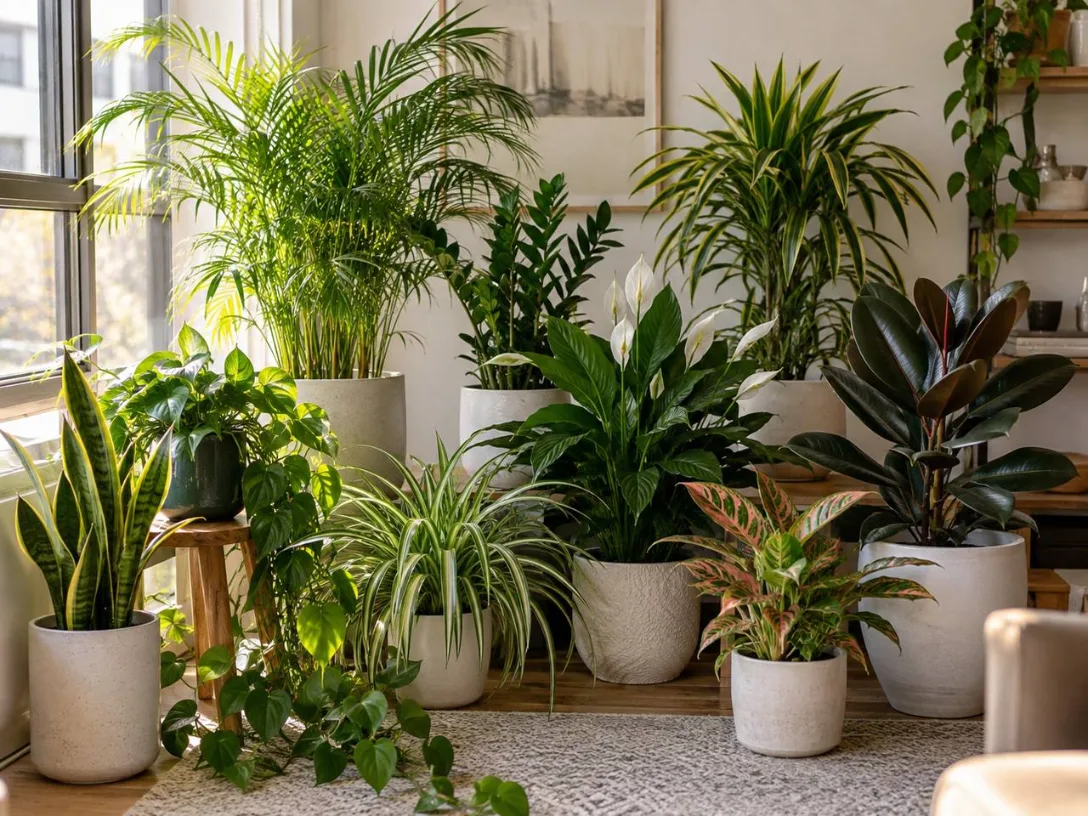
The snake plant is one of the most resilient indoor plants available. Its upright architectural leaves make it suitable for both contemporary and traditional interiors. Snake plants tolerate a wide range of light conditions and do not require frequent watering. In fact, overwatering is one of the most common causes of problems with this plant.
The ZZ plant is widely considered one of the easiest houseplants to maintain. Its thick glossy leaves and underground rhizomes allow it to store moisture, making it particularly suitable for people who may occasionally forget to water their plants.
The peace lily is one of the most popular flowering houseplants. Its dark green foliage and elegant white flowers make it suitable for homes, offices and hospitality interiors. Peace lilies prefer indirect light and generally appreciate higher humidity.
The spider plant is resilient, fast-growing and extremely easy to propagate. It adapts well to indoor environments and recovers quickly from minor care mistakes. It is suitable for kitchens, home offices, balconies and bright hallways.
Pothos is one of the most popular trailing indoor plants. It grows quickly and can be displayed as a hanging plant or trained vertically on a support. Pothos adapts to a range of lighting conditions, although bright indirect light usually produces stronger growth and better variegation.
The rubber plant is known for its large, glossy leaves and strong architectural appearance. It works especially well in living rooms, offices, hotels and larger indoor spaces. Ficus elastica prefers stable conditions and generally does not respond well to frequent changes in location.
Dracaena is widely used in indoor landscaping. Different species offer a variety of leaf shapes and colors, including green, yellow, red and variegated foliage. Its upright growth habit makes it particularly useful for creating vertical greenery in interiors.
Aglaonema is primarily valued for its highly decorative foliage. Varieties are available in silver, green, pink and red tones. It adapts well to medium light levels and is commonly used in offices, apartments and commercial interiors.
Philodendrons are among the most versatile indoor plants. There are compact varieties, climbing forms and large-leaved species. Most adapt well to indoor conditions and thrive in bright to medium indirect light.
The Areca palm is a larger and more dramatic indoor plant. Its soft, feathery foliage brings a natural tropical character to the interior. It is especially suitable for spacious living rooms, hotel lobbies, reception areas and larger offices.
Choosing a houseplant based only on appearance is rarely enough. Before selecting a plant, consider available light, window orientation, indoor temperature, humidity levels, how frequently you can water, mature plant size and whether pets or young children are present.
Certain houseplants have shown an ability to absorb specific volatile organic compounds in laboratory studies. However, in real indoor environments, a few plants generally have a much smaller effect on air purification than popular claims suggest. Houseplants should therefore not replace proper ventilation or mechanical air filtration.
Even low-maintenance houseplants can suffer when their basic needs are ignored. Overwatering is one of the most common mistakes in indoor plant care. For many species, constantly wet soil is more harmful than allowing the upper layer of soil to dry slightly between waterings.
Indoor plants can completely transform the atmosphere of a room. The right species can be attractive, resilient and relatively easy to maintain. Snake plants, ZZ plants, peace lilies, spider plants, pothos, rubber plants, Dracaena, Aglaonema, Philodendron and Areca palms are all excellent choices for homes, offices and commercial spaces.