MAGHAKYAN BOTANIC
Maghakyan Botanic
Blog
A modern office is no longer simply a collection of desks, computers and meeting rooms. The quality of the workplace environment can influence employee comfort, concentration, mood and overall work experience.
This is why more companies are investing in office phytodesign and professional indoor landscaping.
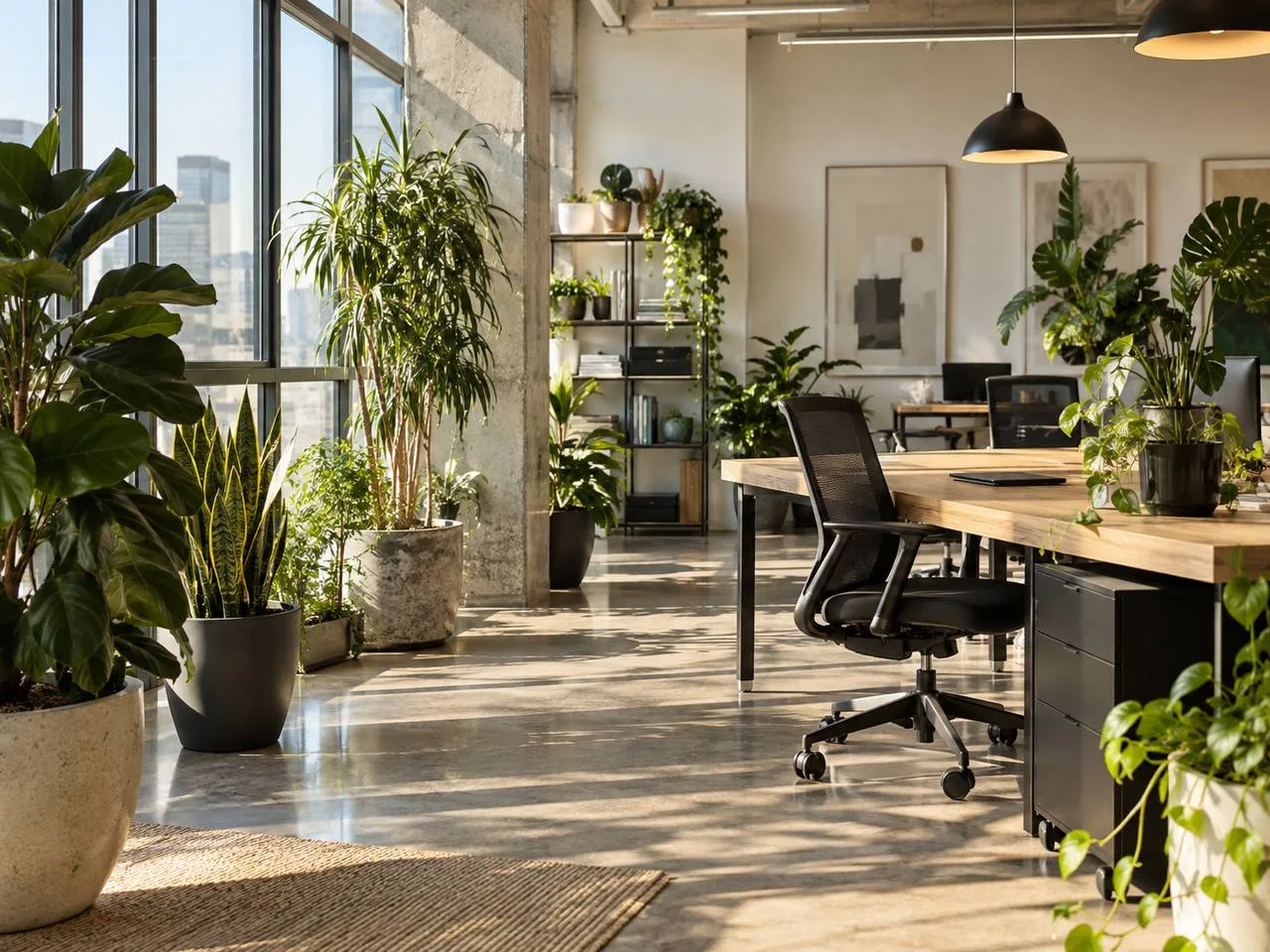
Well-selected plants can make an office feel more natural, welcoming and visually balanced. They can soften hard architectural surfaces, help define functional zones and contribute to a more comfortable working atmosphere.
Plants should not be viewed as a magical tool that automatically increases productivity. Their effect is more indirect: a thoughtfully designed green environment can support comfort, reduce visual stress and contribute to conditions that are more suitable for focused work.
Phytodesign is the professional use of living plants as an integrated part of interior design. It goes far beyond simply placing a few pots around the office. A professional office plant design considers natural light levels, window orientation, temperature, humidity, air-conditioning, circulation routes, interior style, mature plant size and long-term maintenance requirements.
Natural greenery can make an office feel softer and less sterile. Green foliage, organic shapes and natural textures create visual contrast with glass, metal, concrete and technical equipment. For employees who spend many hours looking at screens, plants can provide small visual points of rest throughout the day.
Contemporary offices often contain strong geometric lines and hard surfaces. Plants introduce softer, irregular forms that can make the interior feel more balanced. Large-leaved plants, vertical arrangements and living green walls can also help visually soften architectural features.
Productivity depends on many factors, including lighting, noise, temperature, workplace organization and psychological comfort. Plants do not replace these factors, but they can complement them. A calmer, more natural-looking environment may help some employees feel more comfortable and maintain focus for longer periods.
Office phytodesign can also be functional. Plants can be used to separate individual work areas, lounge spaces, meeting zones, reception areas, kitchen and coffee areas. Tall plants in long planters can serve as natural room dividers without creating solid walls.
A professionally landscaped office can communicate care, quality and attention to detail. This matters not only to employees, but also to clients and visitors. Well-designed plants in reception areas and meeting rooms can contribute to a stronger and more contemporary brand image.
One of the most reliable office plants. It is resilient, requires relatively little watering and fits well in modern interiors.
An excellent low-maintenance option that tolerates occasional gaps in care.
Useful for adding vertical greenery to corners, reception areas and work zones.
Ficus elastica is particularly effective in brighter offices and larger interior spaces.
A good choice for medium-light office environments.
Ideal for trailing arrangements, vertical displays and selected green wall applications.
Larger statement plants can create a strong first impression.
Small or medium plants should enhance the space without reducing usable desk area.
A limited number of well-selected plants can create a calmer and more refined setting.
These spaces can support richer planting to visually distinguish relaxation zones from active work areas.
Tall plants and linear planter arrangements work well when light conditions are suitable.
Living walls have become one of the most recognizable elements of modern office landscaping. They create a large amount of greenery while using relatively little floor space. However, a true living wall requires professional irrigation, appropriate lighting and regular maintenance.
One of the most common mistakes is placing plants only according to aesthetic preferences. A visually attractive location is not always suitable for healthy plant growth. Where natural light is limited, either shade-tolerant species should be selected or supplementary grow lighting should be considered.
Regular maintenance should include checking soil moisture, cleaning dust from leaves, removing damaged foliage, inspecting for pests, fertilizing during active growth, pruning and repotting where necessary.
A common problem in offices is that several employees water the same plant. This often results in overwatering. For this reason, plant care should ideally be assigned to one responsible person or handled by a professional maintenance service.
Not necessarily. Good office phytodesign is about composition rather than quantity. A few carefully selected large plants can create a stronger visual result than dozens of unrelated pots.
Indoor landscaping can be adapted to the identity of a business. A technology company may use minimalist planters and architectural plants. A sustainability-focused brand may prefer a fuller, more natural planting style. Premium offices may use large specimen plants and high-quality decorative containers.
Office phytodesign is closely connected to the broader concept of biophilic design. Biophilic interiors aim to strengthen the connection between people and nature through indoor plants, natural light, timber, stone, organic textures and nature-inspired colors and forms.
Professional office landscaping should begin with a site assessment rather than with the purchase of plants.
Office phytodesign is becoming an increasingly important part of modern workplace design. Well-selected plants can make an office feel more natural, comfortable and visually engaging. They can help define functional areas, support a more pleasant atmosphere and strengthen the professional image of a company.
The most successful office greenery is not created by simply adding more plants. It comes from choosing the right species, placing them according to light conditions, creating a coherent composition and maintaining them properly over time.