MAGHAKYAN BOTANIC
Maghakyan Botanic
Blog
Indoor plants do not require exactly the same care throughout the year. Daylight duration, temperature, humidity and plant growth rates change significantly from one season to another. For this reason, proper indoor plant care should always take into account both the specific needs of each plant species and seasonal conditions.
During summer, most houseplants enter a period of active growth, use more water and nutrients, and develop more quickly. In winter, growth often slows down, while overwatering, low humidity and insufficient light may cause yellowing leaves, leaf drop, root rot and pest problems.
Below are the most important rules for caring for indoor plants in summer and winter.
Warm temperatures and longer daylight hours encourage active plant growth. During this period, it is especially important to monitor soil moisture, leaf condition and nutrient requirements.
Soil dries faster in warm weather, which means most plants require more frequent watering. However, this does not mean every houseplant should be watered every day.
Watering frequency depends on the plant species, pot size, type of growing medium, room temperature and humidity.
Before watering, check the upper layer of the soil. If the top few centimetres have dried, watering is usually appropriate.
It is best to use water at room temperature and, where possible, water plants in the morning or evening.
Most indoor plants prefer bright, indirect light. Strong direct sunlight during the hottest hours of the day can damage foliage and cause leaf scorch.
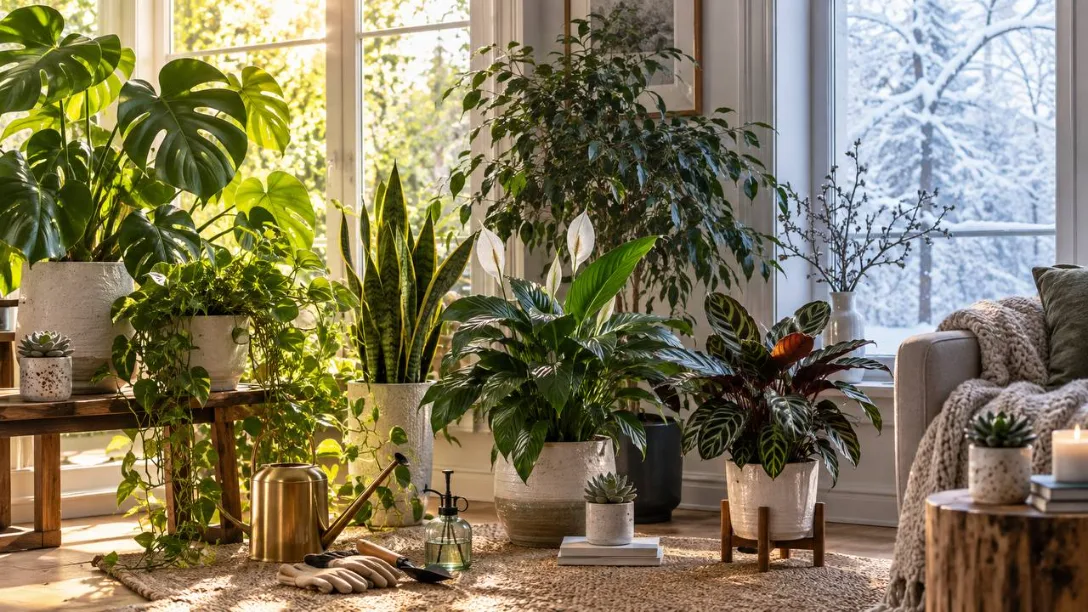
Monstera, ficus, peace lily, calathea and many other popular houseplants grow best in bright but filtered light.
Plants placed close to south-facing windows may require some protection from intense summer sun.
Many tropical indoor plants prefer higher humidity levels.
Humidity can be increased by using a humidifier, grouping plants together or placing water nearby.
Misting may be useful for some species, but it is not suitable for every plant and should not be treated as a universal solution.
Summer is the main feeding period for many indoor plants because their nutrient requirements are higher during active growth.
Plants need a balanced supply of nitrogen, phosphorus, potassium and micronutrients.
Depending on the plant and fertilizer formulation, feeding is often carried out every two to four weeks.
Always follow the recommended dosage. Excess fertilizer may damage roots and cause leaf-tip burn.
Warm, dry indoor conditions may encourage spider mites, thrips, mealybugs and scale insects.
Regularly inspect the undersides of leaves, stems and new growth.
Early detection is one of the most effective ways to prevent a minor pest problem from becoming a serious infestation.
The main challenges of winter plant care are reduced natural light, dry indoor air caused by heating systems and excessive watering.
Most indoor plants grow more slowly in winter and therefore use less water and fewer nutrients.
Overwatering is one of the most common winter houseplant care mistakes.
Because the growing medium dries more slowly, excessive moisture may remain around the roots for too long and lead to root rot.
Always check the soil before watering.
Succulents and cacti generally require especially limited watering during winter.
Shorter daylight hours may cause plants to stretch toward the light, lose some of their colour intensity or slow their growth.
Move plants closer to bright windows when possible.
For light-demanding species, supplemental grow lights can help maintain healthy growth during the darker months.
Dust should also be removed regularly from leaves so plants can make better use of available light.
Radiators and heating systems can create very dry indoor conditions.
This may lead to brown leaf tips, leaf drop and increased spider mite activity.
Whenever possible, keep sensitive plants away from direct sources of hot air and maintain suitable humidity levels for tropical species.
If a plant is growing very slowly or entering a resting phase, fertilization should usually be reduced or temporarily discontinued.
Applying fertilizer when the plant has little demand for nutrients can cause more harm than benefit.
Plants that continue to grow actively under sufficient supplemental lighting may still be fed at a lower concentration.
Most indoor plants are comfortable at approximately 18–25°C, although individual species have different requirements.
Avoid sudden temperature changes and cold drafts.
During winter, foliage placed directly against cold glass may become damaged, while the same location can become excessively hot in summer.
Healthy indoor plants depend greatly on suitable potting soil and proper drainage.
Plant containers should have drainage holes whenever possible. Water remaining around the root system for prolonged periods is one of the most common causes of root problems.
The growing medium should be appropriate for the plant species while allowing good air circulation and drainage.
If roots are growing through the drainage holes, the soil dries unusually quickly or plant growth has slowed significantly, repotting may be necessary.
Spring and early summer are generally the best times to repot most indoor plants because they are entering a period of active growth.
Avoid choosing a container that is excessively large, as additional soil can retain moisture for too long.
Dusty leaves are not only less attractive but also receive light less efficiently.
Large-leaved houseplants can be gently wiped with a soft, damp cloth.
Regular leaf cleaning also provides an opportunity to inspect plants for pests and early signs of disease.
There is no single watering or feeding schedule that works for every indoor plant.
Snake plants and ZZ plants can tolerate significant drying between waterings, while calatheas usually require more consistent soil moisture and higher humidity.
Successful houseplant care therefore begins with understanding the natural requirements of each species.
In offices, restaurants, hotels, commercial properties and other spaces with large indoor plant collections, regular professional monitoring is especially valuable.
Professional Plant Care and Maintenance services may include watering management, fertilization, pruning, leaf cleaning, pest and disease monitoring, treatments and plant replacement when necessary.
Consistent professional care helps indoor plants maintain healthy growth, natural colour and a high-quality decorative appearance throughout the year.