MAGHAKYAN BOTANIC
Maghakyan Botanic
Blog
Healthy plant growth depends not only on watering and light, but also on choosing the right soil. Soil supports the root system, controls the balance of water and air, supplies nutrients and strongly influences plant resilience.
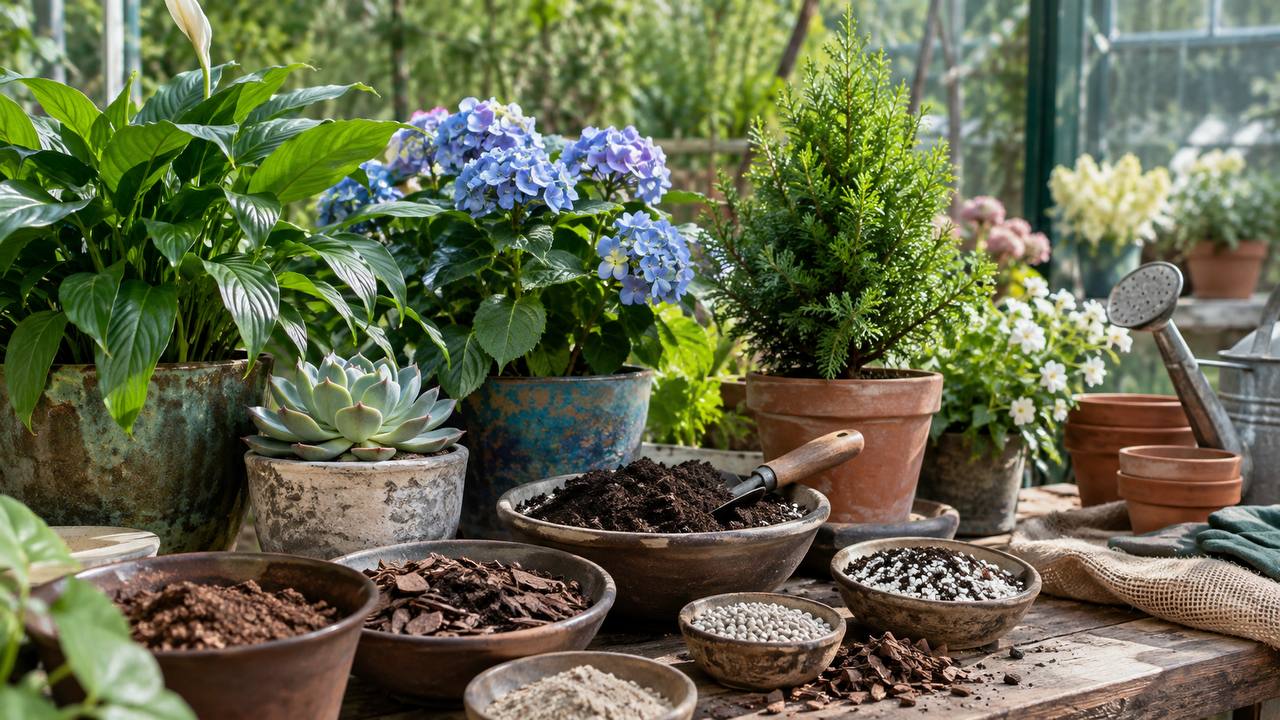
A common mistake is using the same universal potting mix for every plant. A cactus, hydrangea, rose, conifer and indoor ficus have very different requirements for drainage, pH, structure and nutrient content.
Heavy soil can remain wet for too long and reduce oxygen around roots. Very light soil can dry too quickly and lose nutrients. A good growing medium should provide aeration, appropriate moisture retention and effective drainage.
Clay soils hold water for longer, sandy soils drain quickly, while well-structured loamy soils with organic matter often provide a more balanced environment.
Soil pH determines whether the growing medium is acidic, neutral or alkaline and affects nutrient availability. Many ornamental plants prefer slightly acidic to neutral conditions, while certain species require more acidic soil.
Good drainage is especially important for houseplants, conifers, lavender, cacti and succulents. Prolonged waterlogging can lead to oxygen deficiency and root rot.
Ficus, Philodendron, Monstera and Aglaonema generally prefer a loose, well-aerated and moderately moisture-retentive potting mix. Peat- or coco-based substrates are often combined with perlite, bark or other structural materials.
These plants need a fast-draining mix with a high proportion of mineral material. Perlite, pumice, coarse sand or fine gravel can improve aeration and drainage.
Roses perform best in fertile, structured and well-drained soil, usually with a slightly acidic to neutral pH. Waterlogged soil weakens roots, while very poor soil can reduce growth and flowering.
Hydrangeas prefer moisture-retentive but well-drained soil and generally perform well in slightly acidic conditions. For Hydrangea macrophylla, soil pH may also influence flower color. Alkaline soils can contribute to iron chlorosis.
Many conifers prefer well-drained, moderately fertile and slightly acidic soil, although individual pines, spruces, junipers and Thuja species have different tolerances.
Lavender, rosemary and many Mediterranean plants prefer light, fast-draining and relatively lean soils. Overly rich or constantly wet soil can reduce their resilience.
Thuja, yew, boxwood and other evergreen shrubs need structured soil without prolonged waterlogging. For hedges, soil improvement should be carried out along the entire planting line rather than only in isolated holes.
Most fruit trees grow best in deep, fertile and well-drained soil. Compaction, poor drainage and high salinity can significantly restrict root development and productivity.
Simply adding sand to heavy clay does not always improve it. A better approach is to gradually add organic matter, compost and structural amendments and to correct drainage where necessary.
Sandy soil drains quickly but loses moisture and nutrients rapidly. Compost, humus, organic matter and mulch can improve water-holding capacity without making the soil excessively heavy.
Fertilizers replace nutrients used during plant growth or naturally lacking in the soil. However, fertilizer cannot compensate for unsuitable soil, poor drainage or a damaged root system.
The three numbers on a fertilizer label represent nitrogen (N), phosphorus (P) and potassium (K). Nitrogen supports vegetative growth, phosphorus is important for roots and energy processes, and potassium contributes to overall plant resilience and water regulation.
Plants also require calcium, magnesium, iron and other micronutrients.
Nutrient demand usually increases during active growth. For many houseplants this is spring and summer, while garden plants generally need feeding during active stages of the growing season.
Fertilization is often reduced during dormancy unless growing conditions require otherwise.
Overfertilization can burn roots, damage leaf margins, increase salinity and in severe cases kill the plant.
Organic fertilizers can improve both soil structure and biological activity. Mineral fertilizers provide nutrients more quickly and precisely but require careful dosing. A balanced approach is often the most effective.
Yellow leaves do not always indicate nitrogen deficiency. Iron deficiency often causes young leaves to yellow while veins remain greener, while magnesium deficiency is more commonly visible on older leaves.
Similar symptoms may also result from unsuitable pH or root damage, so diagnosis should come before treatment.
Over time, potting mix can become compacted, lose structure and accumulate salts. Repotting may be needed when water drains very slowly, roots fill the container or plant growth declines significantly.
For large landscaped areas, orchards and sites with recurring plant problems, testing soil pH, salinity and structure can provide valuable information. Laboratory analysis may be especially useful before major soil amendments or fertilization programs.
There is no single perfect soil for every plant. Cacti need fast-draining media, hydrangeas prefer moisture-retentive slightly acidic soil, and roses benefit from fertile, structured ground. The same principle applies to fertilization: the right product, for the right plant, at the right time and at the right dose.